
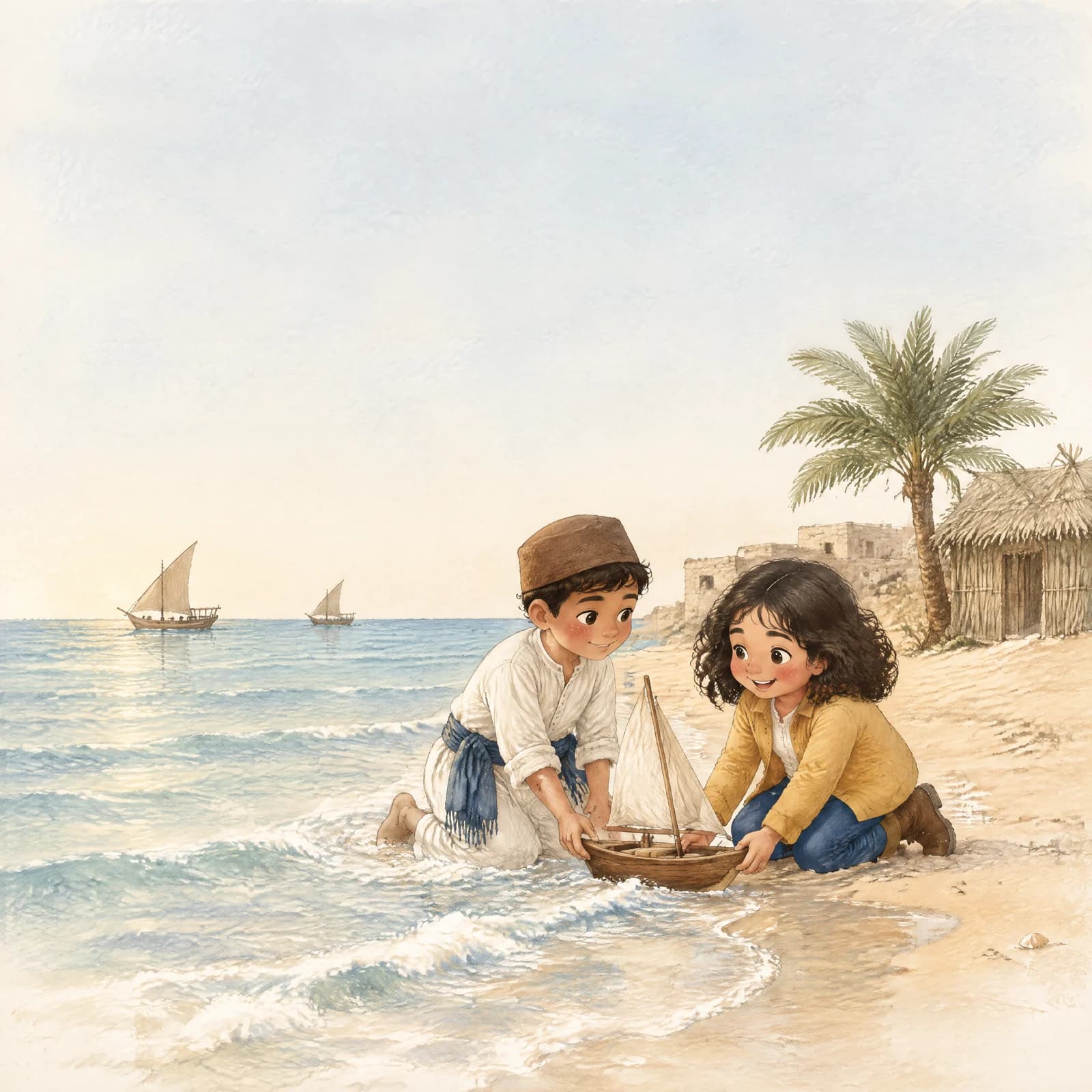

في شبابي أبحرتُ على السفن الخشبيّة في جُلفار. ولسفننا الشراعيّة شراعٌ كبير على شكل مثلّث.
هذا الشراع الذكيّ يجعل السفينة تُبحر حتّى حين تهبّ الريح من جانبها، لا من خلفها فقط. لكنّه ثقيل، ويحتاج رفعه إلى أيدٍ كثيرة.
اسحبي الحبل معنا يا تالين. هيّا نرفع الشراع!
As a young man, I sailed on the dhows of Julfar. A dhow is a wooden sailing ship with a big triangular sail, called a lateen sail.
This clever sail lets a dhow sail even when the wind blows from the side, not only from behind. But it is heavy, and it takes many hands to raise it.
Pull the rope with us, Taleen. Up goes the sail!
كانت سفنٌ كثيرة في المحيط الهنديّ تُبنى بلا مسامير: كانت ألواحها الخشبيّة تُخاط بعضها إلى بعض بحبالٍ من ليف جوز الهند.
Many ships of the Indian Ocean were built without nails: their wooden planks were sewn together with rope made from coconut fibre.
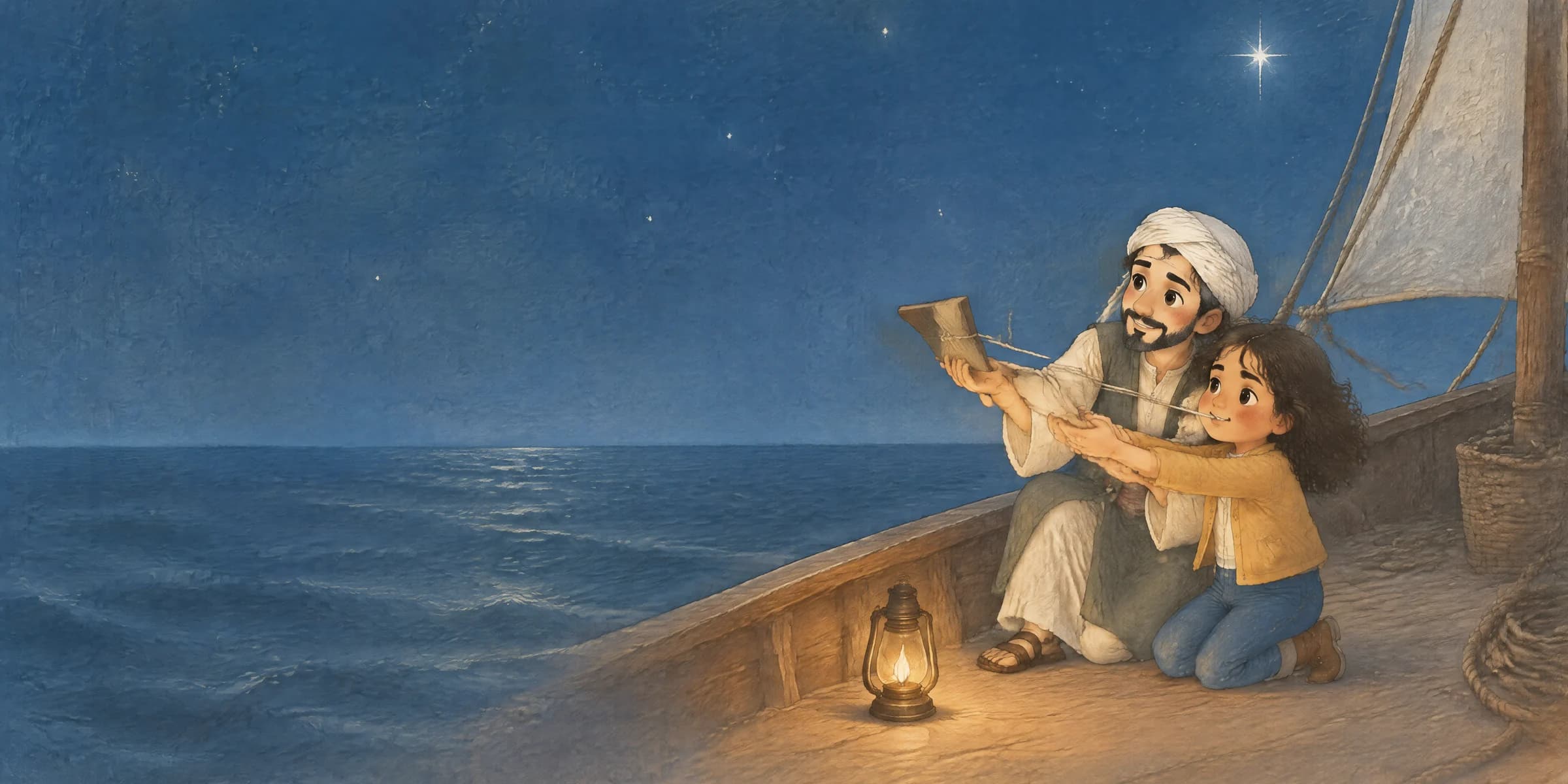
في عرض البحر، كيف يعرف البحّار أين هو؟ في الليل كنتُ أقيس ارتفاع النجم القطبيّ فوق البحر: كلّما أبحرنا جنوبًا، انخفض أكثر.
وكنّا نستعمل «الكمال»: لوحًا خشبيًّا صغيرًا مربوطًا بخيطٍ فيه عُقَد. يُمسك الملّاح الخيط بأسنانه، ويجعل أسفل اللوح على خطّ البحر وأعلاه عند النجم. وكانت كلّ عقدةٍ تدلّ على ميناء.
عضّي على الخيط يا تالين… والآن ابحثي عن النجم القطبيّ!
Far out at sea, how do you know where you are? At night, I measured how high the Pole Star stood above the sea: the further south we sailed, the lower it sank.
We used a kamal, a little wooden board on a knotted string. You hold the string in your teeth, then line up the bottom of the board with the sea and the top with the star. Each knot matched a port.
Bite the string, Taleen… now find the Pole Star!
كان الملّاحون يقيسون ارتفاع النجم بـ«الأصابع»: عرض إصبعٍ واحد عند مدّ الذراع. وكانوا يقسمون كلّ إصبعٍ إلى ثمانية أجزاء!
Navigators measured a star’s height in “fingers”: the width of a finger held out at arm’s length. Each finger was split into eight smaller parts!
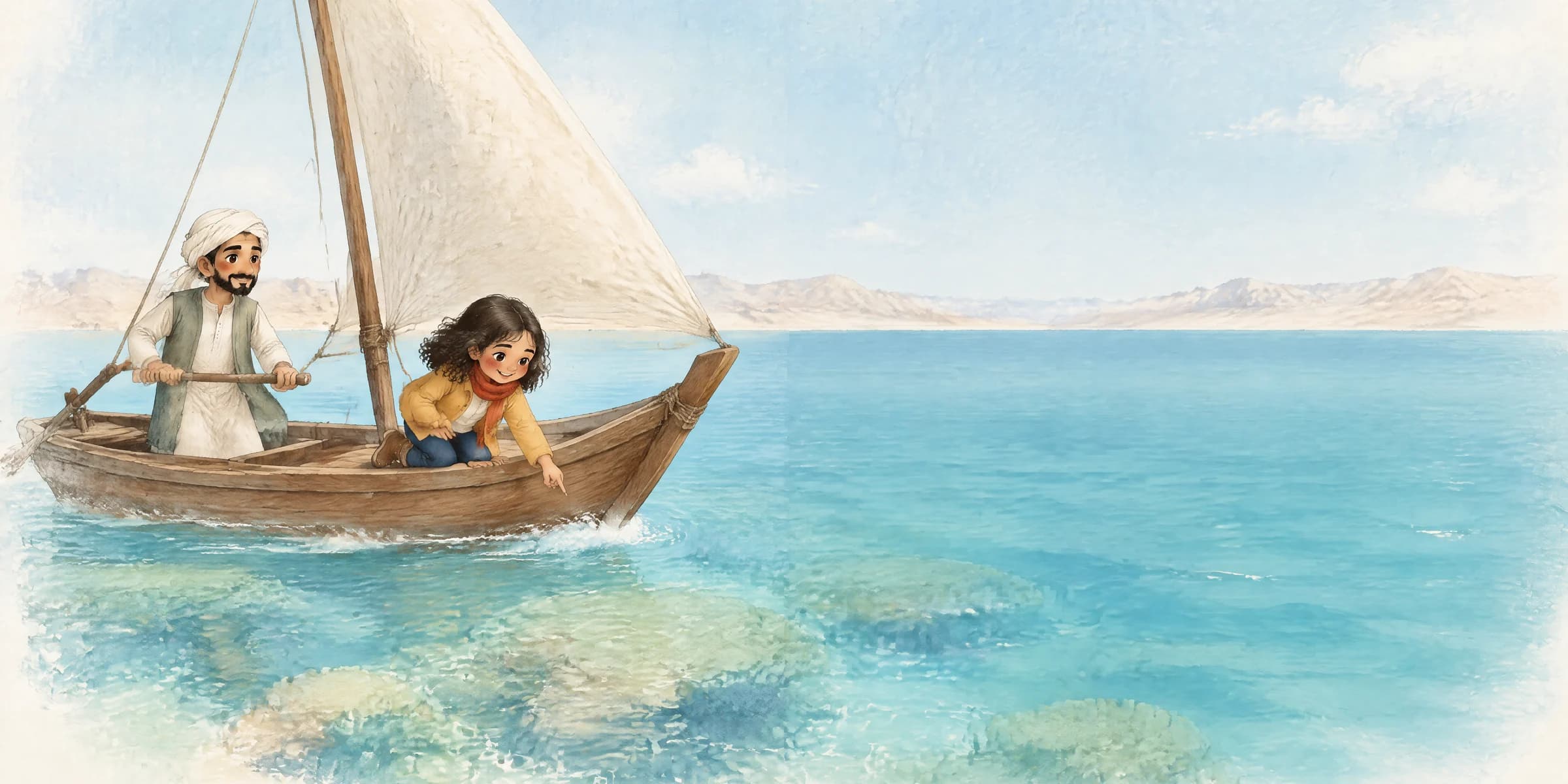
البحر الأحمر جميل، لكنّه خطِر: فالشعاب المرجانيّة تختبئ تحت سطح الماء مباشرةً، وفي شمال جدّة تهبّ الريح في وجه السفن طوال السنة.
كان أبي يعرف هذه المياه جيّدًا، حتّى إنّه كتب عنها قصيدةً طويلة تزيد على ألف بيت.
وفي سنة ١٤٧١ دخلنا البحر الأحمر في وجه رياحٍ شماليّة قويّة، ووصلنا إلى جدّة بعد رحلةٍ صعبة.
راقبي الماء يا تالين! حيث يصير لونه فاتحًا، تختبئ الشعاب.
The Red Sea is beautiful, but dangerous. Coral reefs hide just under the water, and north of Jeddah the wind blows against you all year round.
My father knew these waters so well that he wrote a poem about them, more than a thousand lines long.
In 1471, we sailed into the Red Sea against strong north winds and reached Jeddah after a difficult voyage.
Watch the water, Taleen! Where it turns pale, a reef is hiding.
يعيش في البحر الأحمر أكثر من ألف نوعٍ من الأسماك، وأكثر من واحدٍ من كلّ عشرة منها لا يعيش في أيّ مكانٍ آخر في العالم.
The Red Sea is home to more than a thousand kinds of fish, and more than one in ten of them live nowhere else in the world.

في رحلاتي، كانت رياح الصيف الموسميّة تحملنا عبر البحر المفتوح إلى الهند. وقصائدي تصف سواحلها ميناءً بعد ميناء: فوق ميناء كَنبايَة كان النجم القطبيّ يرتفع أحد عشر «إصبعًا».
وإلى الجنوب تقع قاليقوط، ميناء الفلفل الكبير، حيث يجتمع التجّار من كلّ أنحاء المحيط.
ساعديني في حمل الفلفل يا تالين. انتبهي، لا تعطسي!
On my voyages, the summer monsoon carried us across the open sea to India. My poems describe its coasts, port after port: over the port of Cambay, the Pole Star stood eleven “fingers” high.
Further south lay Calicut, the great port of pepper, where merchants from all around the ocean came to trade.
Help me carry the pepper, Taleen. Careful, don’t sneeze!
ظلّ الناس زمنًا طويلًا يقولون إنّ ابن ماجد هو الذي أرشد المستكشف البرتغاليّ فاسكو دا غاما إلى الهند سنة ١٤٩٨، لكنّ المؤرّخين اليوم يرون أنّه كان ملّاحًا آخر من كُجَرات في الهند.
For a long time, people said Ibn Majid guided the Portuguese explorer Vasco da Gama to India in 1498. Historians now think it was a different pilot, from Gujarat in India.

واليوم ترقد جُلفار القديمة تحت رمال رأس الخيمة. وقد كشف علماء الآثار عن شوارعها وبيوتها، وعن خزفٍ أزرق وأبيض حملته السفن من الصين، وتأمل الإمارات أن تصبح جُلفار موقعًا من مواقع التراث العالميّ.
وفي أبوظبي، يروي متحف زايد الوطنيّ حكاية بحرنا، من زمني إلى زمنكِ.
فكلّما رفعتِ عينيكِ إلى النجوم لتهتدي إلى طريقكِ…
ستجدينني أُبحر إلى جانبكِ يا تالين.
Today, old Julfar lies under the sand of Ras Al Khaimah. Archaeologists have found its streets and houses, and blue-and-white porcelain that ships brought from China, and the UAE hopes to make it a World Heritage Site.
In Abu Dhabi, the Zayed National Museum tells the story of our sea, from my time to yours.
So whenever you look up at the stars to find your way…
I’m sailing right beside you, Taleen.
في سنة ٢٠٢١، وفي إكسبو ٢٠٢٠ دبي، وقف مجسّمان عملاقان لابن ماجد وللرحّالة الكبير ابن بطوطة، طول كلٍّ منهما تسعة أمتار، في جناح التنقّل.
In 2021, at Expo 2020 Dubai, giant figures of Ibn Majid and of the great traveller Ibn Battuta, nine metres tall, stood at the Mobility Pavilion.
Walk With Me: Ahmad ibn Majid
Ahmad ibn Majid, “the Lion of the Sea”, takes your child aboard: the harbour of Julfar, a dhow's triangular sail, the monsoon winds, the stars that guided sailors and the coral reefs of the Red Sea. Your child is in every picture, with real dates, places and a fact on every page.
- A true story: real dates, real places and a “Did you know?” fact on every page
- Their name on every page, in Arabic and English, French or Spanish
- Painted into every picture to look like them: from your photo, or skin tone, hairstyle or hijab, hair colour, glasses
- Preview every page before you pay
Takes about 3 minutes · preview before you pay
The story
Ahmad ibn Majid takes your child by the hand and tells them his true story: a boy from Julfar, in today's Ras Al Khaimah, born into a family of master navigators, who learned the winds and the stars, sailed the dhows of the Gulf with the monsoon to India and East Africa, steered through the coral reefs of the Red Sea and wrote about forty works on the sea, most of them poems. People still call him “the Lion of the Sea”.
Is it true?
Yes. Every date, place and person is real, and every page has a “Did you know?” fact. At the back: a timeline of his life, a few new words, and a certificate in your child's name.
Ages
Written for 5 to 10 year olds: a real story to read together, and to read alone as they grow.
Size & quality
Square hardcover, 21 × 21 cm, with a matte cover and 32 pages of thick 200gsm gloss paper. Printed one copy at a time, just for your child.
Delivery
Printed just for your child and sent with tracking: about 7–10 days to the UAE, usually 10–14 days to other countries. We deliver worldwide, and delivery is free on orders over $100.
Languages
Arabic with English, French or Spanish (or any two of them), both on every page. The Arabic is written for a boy or a girl, so it always reads naturally.
They walk beside Ahmad ibn Majid on every page
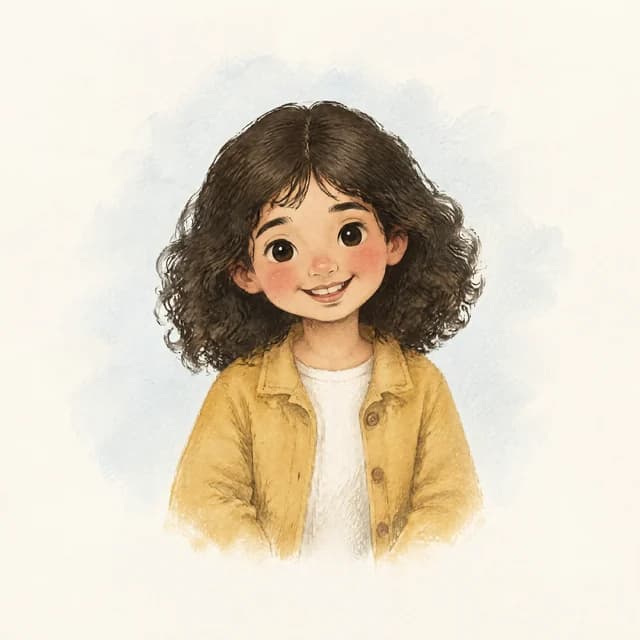
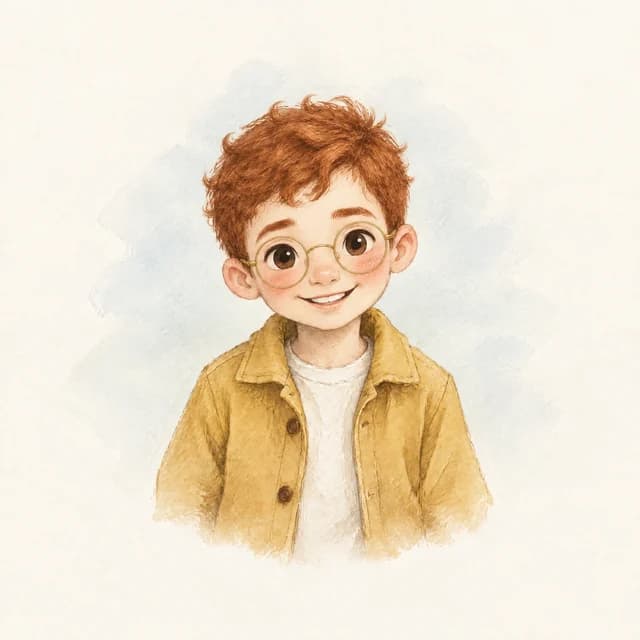
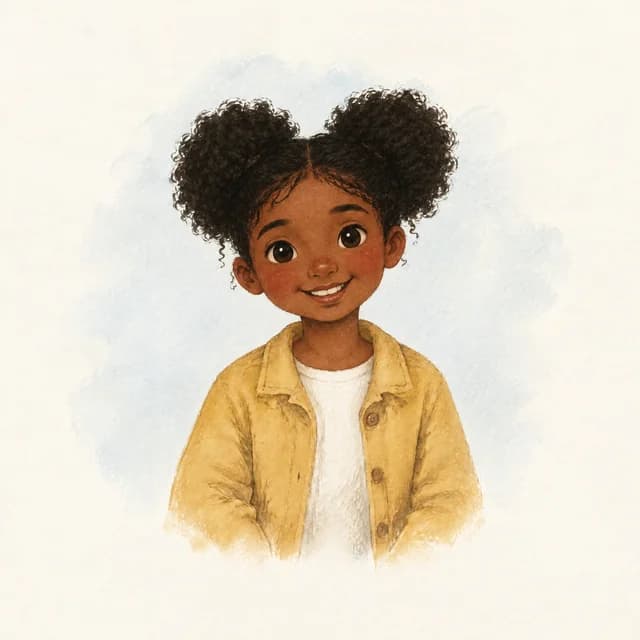

Painted to look like them
Painted from your photo, or pick boy or girl, four skin tones, nine hairstyles or a hijab, five hair colours, with or without glasses.
في عرض البحر، كيف يعرف البحّار أين هو؟ في الليل كنتُ أقيس ارتفاع النجم القطبيّ فوق البحر: كلّما أبحرنا جنوبًا، انخفض أكثر.
وكنّا نستعمل «الكمال»: لوحًا خشبيًّا صغيرًا مربوطًا بخيطٍ فيه عُقَد. يُمسك الملّاح الخيط بأسنانه، ويجعل أسفل اللوح على خطّ البحر وأعلاه عند النجم. وكانت كلّ عقدةٍ تدلّ على ميناء.
عضّي على الخيط يا تالين… والآن ابحثي عن النجم القطبيّ!
Far out at sea, how do you know where you are? At night, I measured how high the Pole Star stood above the sea: the further south we sailed, the lower it sank.
We used a kamal, a little wooden board on a knotted string. You hold the string in your teeth, then line up the bottom of the board with the sea and the top with the star. Each knot matched a port.
Bite the string, Taleen… now find the Pole Star!
كان الملّاحون يقيسون ارتفاع النجم بـ«الأصابع»: عرض إصبعٍ واحد عند مدّ الذراع. وكانوا يقسمون كلّ إصبعٍ إلى ثمانية أجزاء!
Navigators measured a star’s height in “fingers”: the width of a finger held out at arm’s length. Each finger was split into eight smaller parts!
A true story on every page
Real dates, places and people, told by Ahmad ibn Majid himself, with a “Did you know?” fact on every spread.
Their name on every page
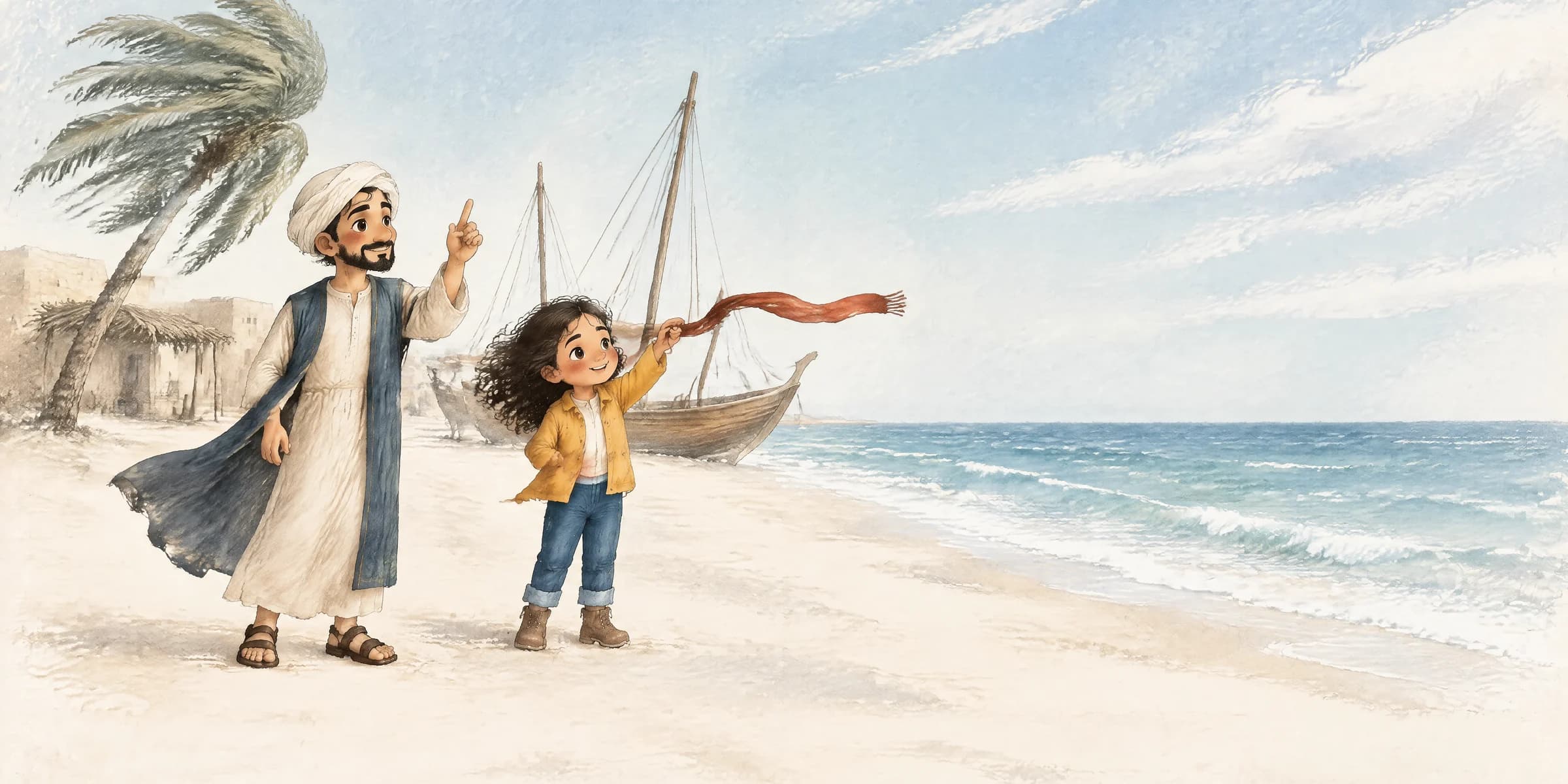
Ahmad talks to them all the way: “Hold up the ribbon, Taleen. Where is the wind coming from?”
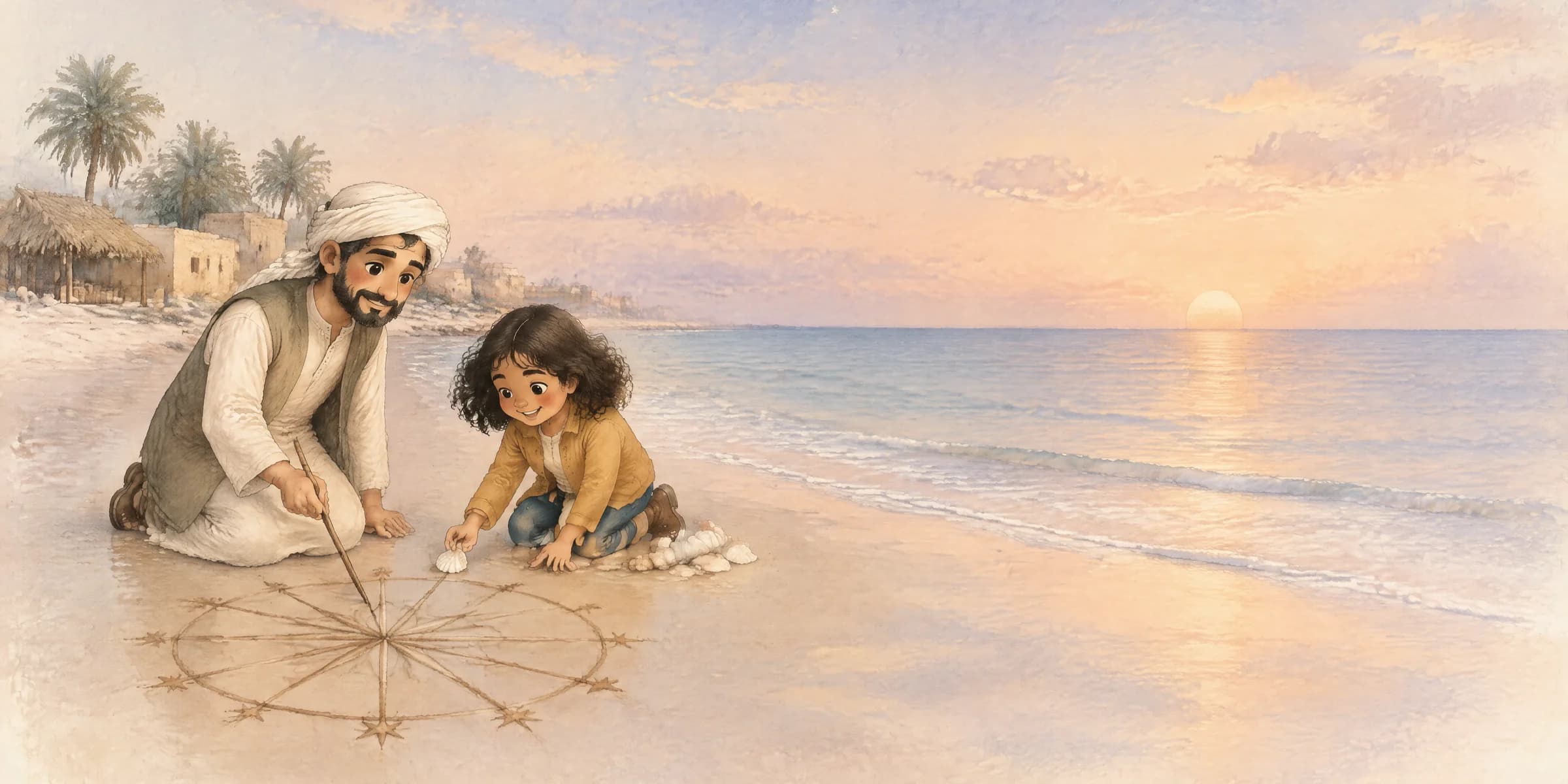
وكانت لنا بوصلةٌ من النجوم أيضًا: فيها اثنان وثلاثون اتّجاهًا نسمّيها «الأخنان»، وكلّ اتّجاهٍ يحمل اسم المكان الذي يطلع منه نجمٌ لامع أو يغيب فيه: «مطلع الثريّا»، و«مغيب سهيل»…
أمّا الشمال فهو النجم القطبيّ، الذي لا يكاد يتحرّك.
وكتبتُ في كتبي بفخرٍ عن هذه الاتّجاهات الاثنين والثلاثين.
ضعي صدفةً عند مطلع الثريّا يا تالين!
We also had a compass made of stars. It had thirty-two directions, and each one was named after the place where a bright star rises or sets: “the rising of the Pleiades”, “the setting of Canopus”…
North was the Pole Star, which hardly moves at all.
In my books, I wrote proudly about our thirty-two star directions.
Put a shell where the Pleiades rise, Taleen!
ما زال نجم سهيل مهمًّا في الإمارات: فحين يطلع قبيل الفجر في أواخر آب (أغسطس)، يقول الناس إنّ أشدّ أيّام الصيف حرًّا توشك أن تنتهي.
Suhail, the star Canopus, still matters in the UAE: when it rises before dawn in late August, people say the hottest days of summer are ending.
Two languages on every page
Arabic with English, French or Spanish, so the whole family can read it together.
أبحرت تالين مع أحمد بن ماجد من جُلفار إلى الهند وإفريقيا، فرفعت شراعًا مثلّثًا، وأحسّت بالرياح الموسميّة، وقاست ارتفاع النجم القطبيّ بالكمال، واهتدت إلى الطريق بالنجوم.
Taleen sailed with Ahmad ibn Majid from Julfar to India and Africa, raised a triangular sail, felt the monsoon wind, measured the Pole Star with a kamal, and found the way by the stars.
A Young Navigator certificate
After the story, a certificate in your child's name: the sail they raised, the star they measured, the reef they spotted.
- 1421Born in Julfar, on the coast of the Gulf, around this year (some sources say 1432).
- 1462Writes al-Hawiya, a poem about the sea more than a thousand lines long.
- 1471Sails into the Red Sea and reaches Jeddah after a difficult voyage.
- 1490Finishes his great Book of Useful Information, around this year.
- 1500Writes his last known poem, about the stars, and dies soon after.
- 1921A French scholar begins to publish copies of his books.
- 2000A book by Sheikh Dr Sultan Al Qasimi, Ruler of Sharjah, shows that he was not Vasco da Gama’s pilot.
- 2020Julfar joins UNESCO’s list of places hoping to become World Heritage Sites.
A timeline of their life
At the back: his life from Julfar, about 600 years ago, to Julfar on UNESCO's list today, and words to know: navigator, monsoon, dhow…
Read the first pages
This is Taleen's book. Yours will have your child's name and look.
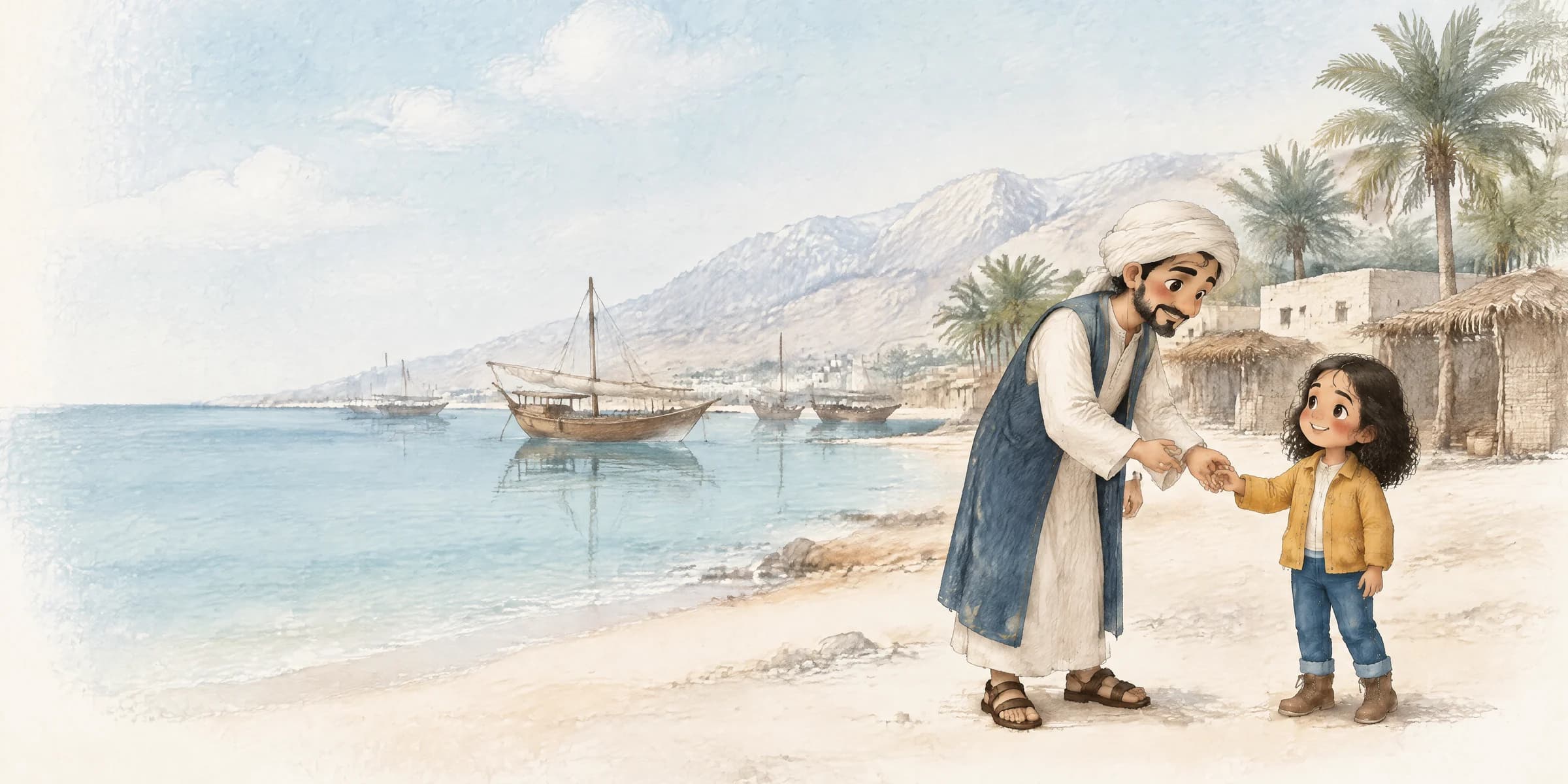
مرحبًا يا تالين. اسمي أحمد بن ماجد.
وُلدتُ قبل نحو ستّمئة سنة في جُلفار، ميناءٍ كثير السفن على ساحل الخليج، تصطفّ أشجار النخيل على شاطئه، وتقف جبال الحجر خلفه. واليوم صار ذلك المكان جزءًا من رأس الخيمة، في دولة الإمارات العربيّة المتّحدة.
قضيتُ نحو خمسين سنةً في البحر، وما زال الناس يسمّونني «أسد البحر».
اصعدي إلى السفينة يا تالين، لنُبحر معًا!
Hello, Taleen. My name is Ahmad ibn Majid.
I was born about six hundred years ago in Julfar, a busy port on the Gulf, with date palms along the shore and the Hajar mountains behind it. Today, that place is part of Ras Al Khaimah, in the United Arab Emirates.
I spent about fifty years at sea, and people still call me “the Lion of the Sea”.
Come aboard, Taleen. Let’s sail together!
اشتهرت جُلفار بلؤلؤها، حتّى إنّ نوعًا من اللؤلؤ سُمّي باسمها.
Julfar was famous for its pearls: one kind of pearl was even named after the town.
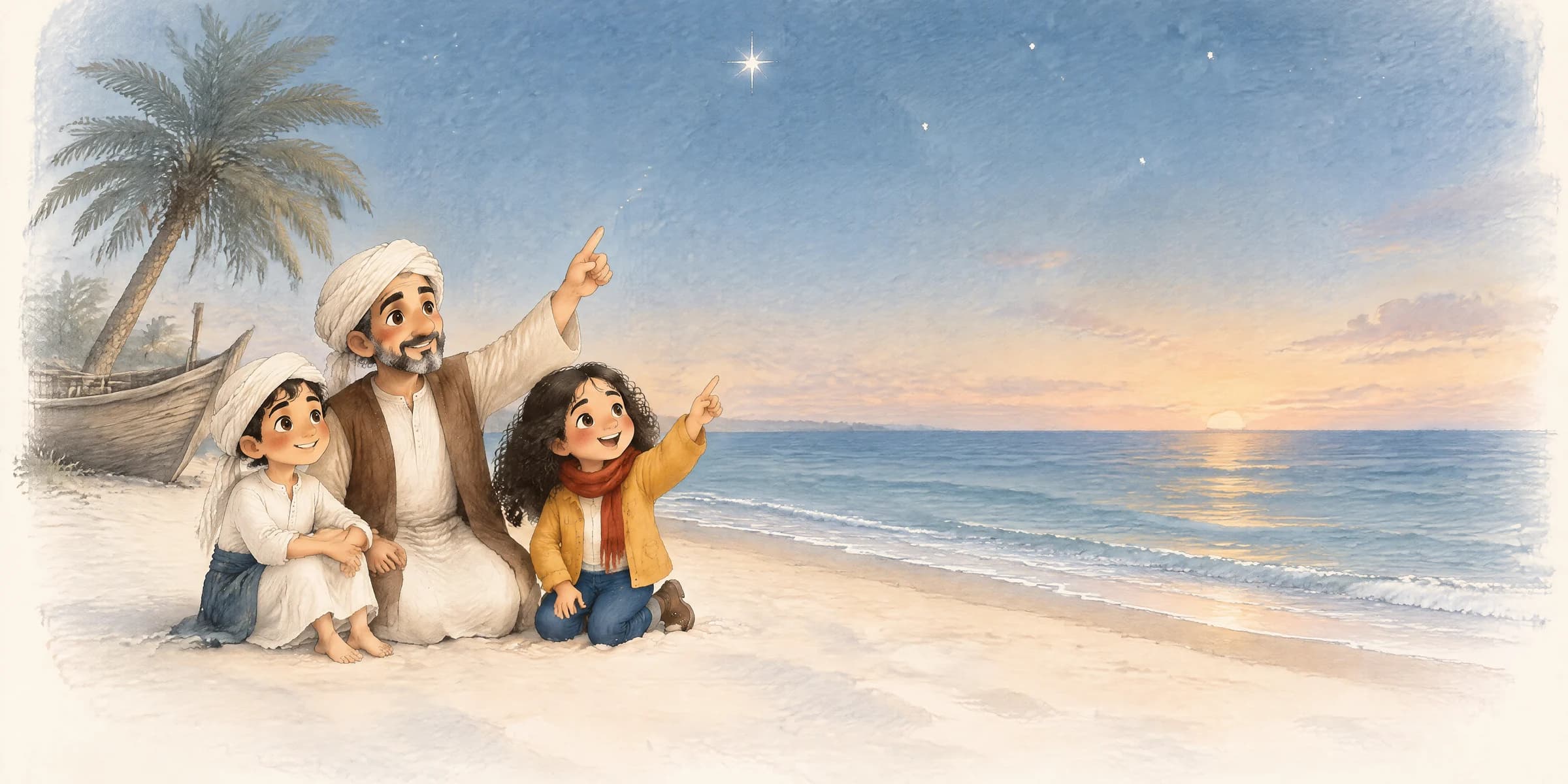
كان أبي ماجد وجدّي محمّد ملّاحَين كبيرين، اشتهرا بالإبحار في البحر الأحمر. وكان الملّاح الخبير يُلقَّب بـ«المعلّم».
أخذني أبي معه إلى البحر، وعلّمني كلّ أسراره: الرياح، والسواحل، والتيّارات، وقبل كلّ شيء النجوم.
انظري يا تالين: ظهرت أوّل نجمة. هل ترينها؟
My father, Majid, and my grandfather, Muhammad, were master navigators, famous for sailing the Red Sea. A master navigator was called a mu’allim, which means “teacher”.
My father took me to sea and taught me all its secrets: the winds, the coasts, the currents and, most of all, the stars.
Look, Taleen: the first star is out. Can you see it?
ما زالت نجومٌ كثيرة تُعرف في العالم كلّه بأسمائها العربيّة، مثل «الطائر» (Altair) و«الدَّبَران» (Aldebaran) و«النسر الواقع» (Vega).
Many stars are still known all over the world by their Arabic names, like Altair, Aldebaran and Vega.
في شبابي أبحرتُ على السفن الخشبيّة في جُلفار. ولسفننا الشراعيّة شراعٌ كبير على شكل مثلّث.
هذا الشراع الذكيّ يجعل السفينة تُبحر حتّى حين تهبّ الريح من جانبها، لا من خلفها فقط. لكنّه ثقيل، ويحتاج رفعه إلى أيدٍ كثيرة.
اسحبي الحبل معنا يا تالين. هيّا نرفع الشراع!
As a young man, I sailed on the dhows of Julfar. A dhow is a wooden sailing ship with a big triangular sail, called a lateen sail.
This clever sail lets a dhow sail even when the wind blows from the side, not only from behind. But it is heavy, and it takes many hands to raise it.
Pull the rope with us, Taleen. Up goes the sail!
كانت سفنٌ كثيرة في المحيط الهنديّ تُبنى بلا مسامير: كانت ألواحها الخشبيّة تُخاط بعضها إلى بعض بحبالٍ من ليف جوز الهند.
Many ships of the Indian Ocean were built without nails: their wooden planks were sewn together with rope made from coconut fibre.
في البحر، الريح هي التي تقرّر كلّ شيء. ففي نصف السنة تهبّ الرياح الموسميّة الكبيرة من الشمال الشرقيّ، ثمّ تنقلب فتهبّ من الجنوب الغربيّ.
لذلك كان البحّارة يتبعون تقويمًا للرياح: في الشتاء نُبحر نحو إفريقيا والبحر الأحمر، وفي الصيف شرقًا إلى الهند. ومن فاتته ريحه انتظر شهورًا حتّى تعود!
ارفعي الشريطة يا تالين. من أين تأتي الريح؟
At sea, the wind decides everything. For half the year, the great monsoon wind blows from the north-east. Then it turns around and blows from the south-west.
So sailors followed a calendar of the winds: in winter, we sailed towards Africa and the Red Sea, and in summer, east to India. Miss your wind, and you waited months for the next one!
Hold up the ribbon, Taleen. Where is the wind coming from?
كلمة «Monsoon» الإنجليزيّة، أي الرياح الموسميّة، أصلها الكلمة العربيّة «موسم».
The English word “monsoon” comes from the Arabic word mawsim, which means “season”.
$49 · preview every page first