


أهلًا بكِ في القاهرة يا تالين، المدينة التي صُنعتُ فيها! قرب باب زويلة القديم، يمتلئ شارعٌ كامل بالفوانيس: بعضها صغيرٌ بحجم تفّاحة، وبعضها أطول من الكبار.
يُحكى أنّه قبل أكثر من ألف سنة، حين وصل الخليفة المعزّ لدين الله، حاكم مصر الجديد، إلى القاهرة في ليلةٍ من ليالي رمضان، خرج الناس بالفوانيس ليُضيئوا له الطريق، وأنّ القاهرة تتلألأ في كلّ رمضان منذ ذلك الحين.
أيّ لونٍ يلمع أكثر يا تالين؟
Welcome to Cairo, Taleen, where I was made! Near the old gate of Bab Zuweila, a whole street fills with lanterns: some as small as an apple, some taller than a grown-up.
It is told that more than a thousand years ago, when Caliph al-Mu’izz, the new ruler of Egypt, arrived in Cairo one Ramadan night, people came out with lanterns to light his way, and that Cairo has glowed every Ramadan since.
Which colour shines brightest, Taleen?
كلمة «فانوس» جاءت من كلمةٍ يونانيّة قديمة تعني «الضوء» أو «المصباح».
The word fanous comes from an old Greek word, phanós, which means “light” or “lantern”.

دُم، دُم، دُم! من يقرع الطبل في الظلام؟ إنّه المسحّراتي! قبل الفجر يمشي في أزقّة صيدا القديمة المرصوفة بالحجارة، قرب البحر في لبنان، يقرع طبلته وينادي الناس بأسمائهم.
حان وقت السحور، وجبةِ ما قبل الفجر. يأكل الكبار ويشربون الآن، لأنّ صيامهم يبدأ مع طلوع الفجر.
لوّحي له يا تالين! إنّه ينادي اسمكِ!
Boom, boom, boom! Who’s drumming in the dark? It’s the musaharati! Before dawn, he walks the old stone lanes of Saida, by the sea in Lebanon, beating his drum and calling people by name.
It’s time for suhoor, the meal before dawn. Grown-ups eat and drink now, because at first light their fast begins.
Wave hello, Taleen! He’s calling your name!
في المغرب يُسمّى من يوقظ الناس للسحور «النفّار»، وهو لا يقرع طبلًا، بل ينفخ في بوقٍ نحاسيّ طويل.
In Morocco, the wake-up caller is called the nafar. Instead of a drum, he blows a long copper horn.
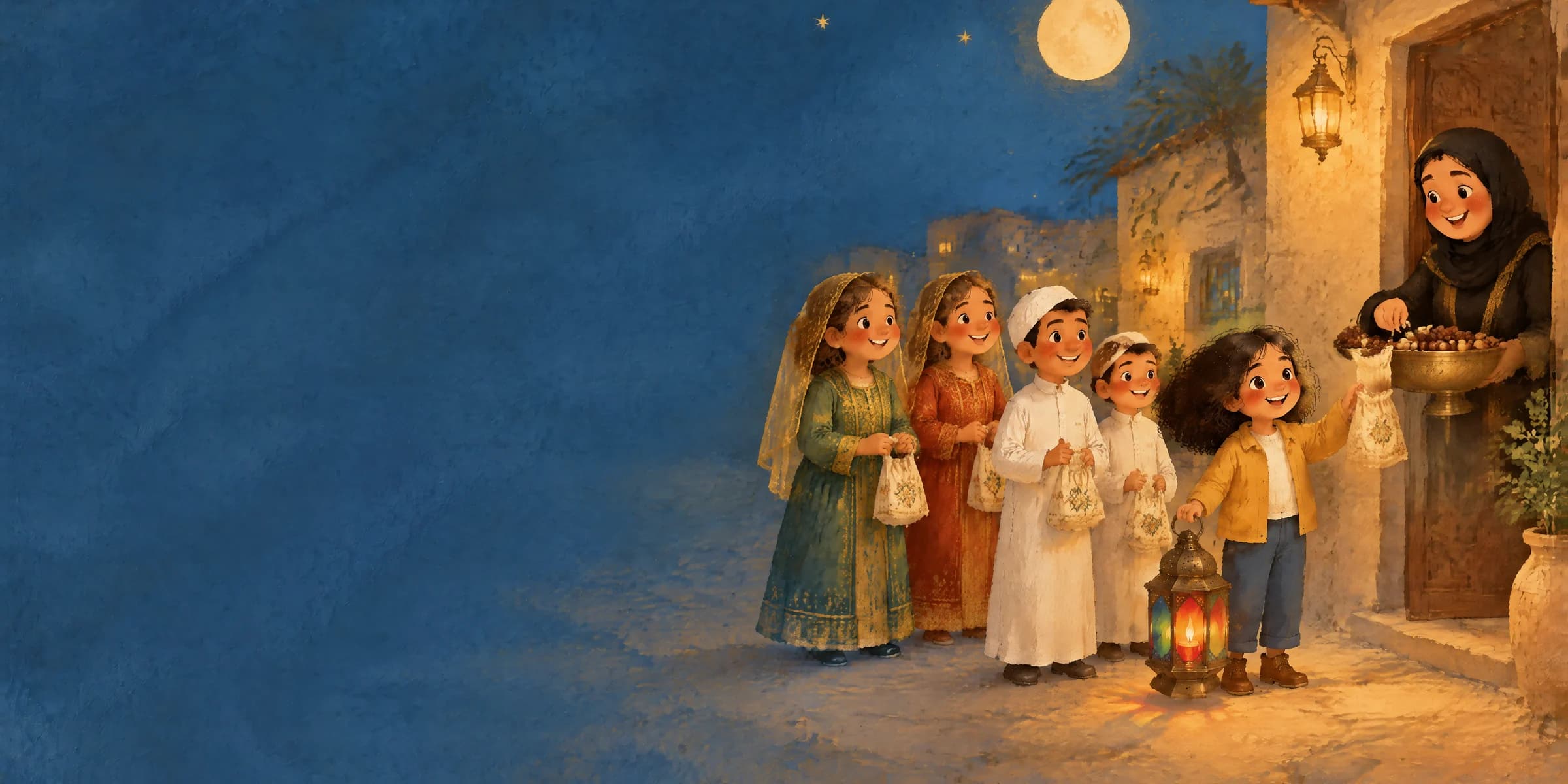
انظري، القمر مستديرٌ تمامًا! وصلنا إلى منتصف رمضان، وهذا يعني في قطر: ليلة القرنقعوه!
يلبس الأطفال أجمل ثيابهم التقليديّة: فساتين مطرّزة بخيوط الذهب، وأثوابًا بيضاء أنيقة. يطوفون على البيوت بابًا بابًا وهم يغنّون أغنيةً قديمة، فيملأ الجيران أكياسهم القماشيّة بالمكسّرات والحلوى. وقد بدأ القرنقعوه احتفالًا بالأطفال الذين يتعلّمون الصيام.
مُدّي كيسكِ يا تالين! ماذا جمعتِ؟
Look how round the moon is! We’re halfway through Ramadan, and in Qatar that means Garangao.
Children put on their best traditional clothes: gold-stitched gowns and crisp white thobes. They go from door to door singing an old song, and neighbours fill their cloth bags with nuts and sweets. Garangao began as a way to cheer on children learning to fast.
Hold out your bag, Taleen! What did you get?
في الكويت وعُمان ليلةٌ مثلها في منتصف رمضان أيضًا. أمّا في الإمارات فتأتي أبكر: «حقّ الليلة» في منتصف شعبان، الشهر الذي يسبق رمضان.
Kuwait and Oman have a night like this in mid-Ramadan too. In the UAE it comes earlier: Haq al-Laila is in the middle of Sha’ban, the month before Ramadan.
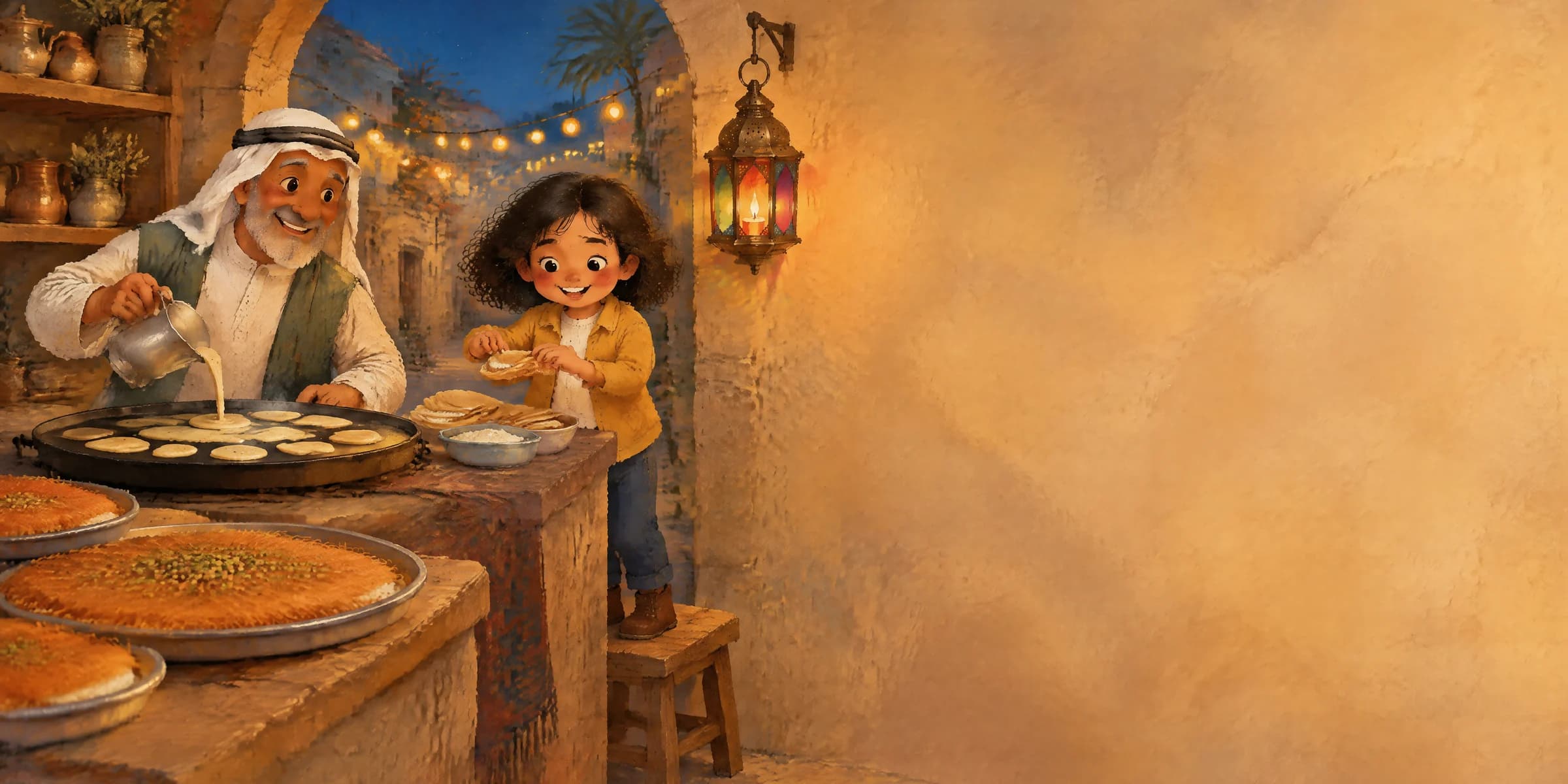
ممم، ما أطيب هذه الرائحة! لا بدّ أنّنا في طرابلس، في لبنان، المدينة المشهورة بمحلّات الحلوى!
يصبّ الحلوانيّ دوائر صغيرة من العجين على صاجٍ ساخن، فتظهر عليها فقاعاتٌ صغيرة في كلّ مكان. هذه هي القطايف، حلوى تُصنع غالبًا في رمضان. وبجانبها صوانٍ من الكنافة الذهبيّة تلمع بالقَطْر.
ضعي القشطة بالملعقة يا تالين، واضغطي على الأطراف لتلتصق. بلطف!
Mmm, what a sweet smell! We must be in Tripoli, in Lebanon, a city famous for its sweet shops!
The baker pours little circles of batter onto a hot griddle, and tiny bubbles pop all over them. These are qatayef, a treat made mostly in Ramadan. Beside them, trays of golden kunafa glisten with syrup.
Spoon in the cream, Taleen, and pinch the edges together. Gently!
تُطهى القطايف على وجهٍ واحد فقط. وقد ورد ذكرها في كتاب طبخٍ عربيّ كُتب قبل أكثر من ١٠٠٠ سنة.
Qatayef are cooked on one side only. They already appear in an Arabic cookbook written more than 1,000 years ago.
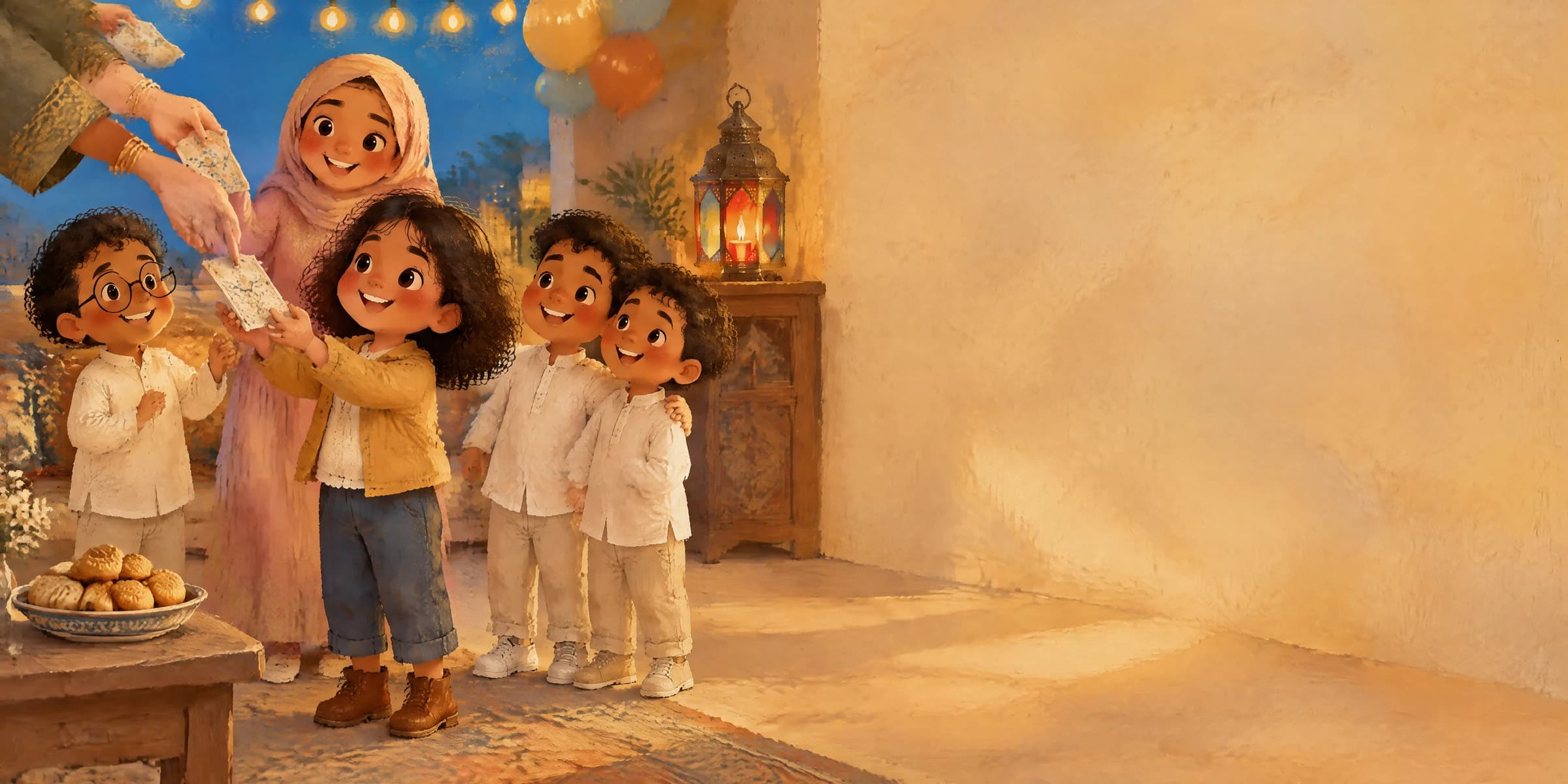
ليلة أمس ظهر الهلال الجديد، رفيعًا ولامعًا. انتهى رمضان، واليوم عيد!
الجميع يلبسون ثيابًا جديدة. تأتي العائلة كلّها للزيارة، فيمتلئ البيت بأبناء العمّ والخال والأصدقاء، وبالعناق وصحون المعمول. وتضع أيادٍ حنونة أوراقًا نقديّة جديدة في مغلّفاتٍ صغيرة: إنّها عيديّتكِ!
سأرتاح على الرفّ حتّى رمضان القادم، لكنّ نوري يبقى معكِ.
دعيه يضيء لكلّ من تلقين يا تالين. كلّ عامٍ وأنتِ بخير!
Last night the new crescent appeared again, thin and bright. Ramadan is over, and today is Eid!
Everyone is in new clothes. The whole family comes to visit: the house is full of cousins and friends, hugs and plates of ma’amoul. Kind hands slip crisp new notes into little envelopes: your Eidiyah!
I’ll rest on the shelf until next Ramadan. But my light goes with you.
Shine it on everyone you meet, Taleen. Eid Mubarak!
«عيد الفطر» يعني عيد الإفطار بعد صيام رمضان، ويُحتفل به في بلدانٍ كثيرة ثلاثة أيّام مليئة بزيارات الأهل والأصدقاء.
Eid al-Fitr means “the festival of breaking the fast”. In many countries it is celebrated for three days, full of visits to family and friends.
The Ramadan Lantern
Your child's own Ramadan lantern lights the way from the first thin crescent to Eid morning: the lantern street of Cairo, the musaharati's drum, the iftar cannon, a street iftar with the neighbours, Garangao sweets and qatayef. Your child is in every picture, with a real tradition and a fact on every page.
- A real Ramadan tradition and a “Did you know?” fact on every page
- Their name on every page, in Arabic and English, French or Spanish
- Painted into every picture to look like them: from your photo, or skin tone, hairstyle or hijab, hair colour, glasses
- Preview every page before you pay
Takes about 3 minutes · preview before you pay
The story
Your child's own fanous, a little Ramadan lantern made in Cairo, lights the way through one whole Ramadan across the Arab world: looking for the new crescent, stringing lights across the street, the lantern sellers of old Cairo, the musaharati's drum before dawn, the iftar cannon in Dubai, dates and water at sunset, a street iftar shared with the neighbours, packing food boxes, Garangao night in Qatar, qatayef in Tripoli, the last ten nights and the joy of Eid morning. Fasting is explained gently and correctly: grown-ups fast from dawn to sunset, and little children usually don't have to.
Is it true?
Yes. Every tradition, place and fact is real and checked, and old legends are told as legends (“it is told that…”). At the back: Ramadan around the world in nine countries, a few new words, and a certificate in your child's name.
Ages
Written for 3 to 8 year olds: short, warm pages to read aloud together, with real facts that older children can read on their own.
Size & quality
Square hardcover, 21 × 21 cm, with a matte cover and 32 pages of thick 200gsm gloss paper. Printed one copy at a time, just for your child.
Delivery
Printed just for your child and sent with tracking: about 7–10 days to the UAE, usually 10–14 days to other countries. We deliver worldwide, and delivery is free on orders over $100.
Languages
Arabic with English, French or Spanish (or any two of them), both on every page. The Arabic is written for a boy or a girl, so it always reads naturally.
Their own lantern lights the way on every page
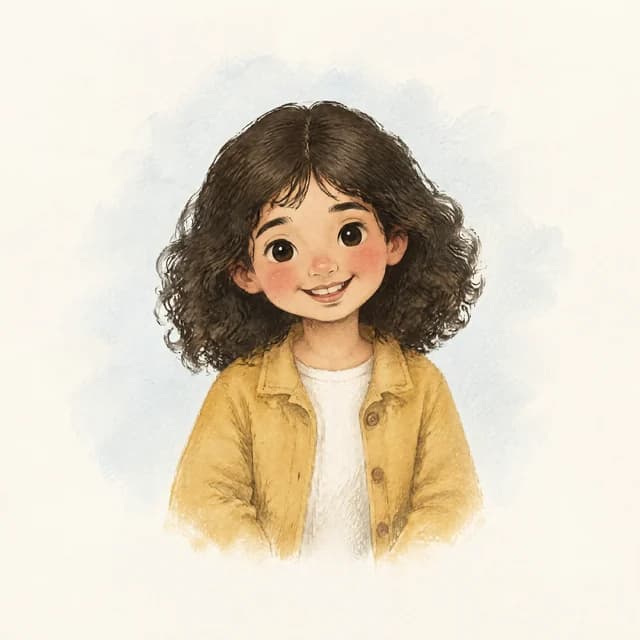

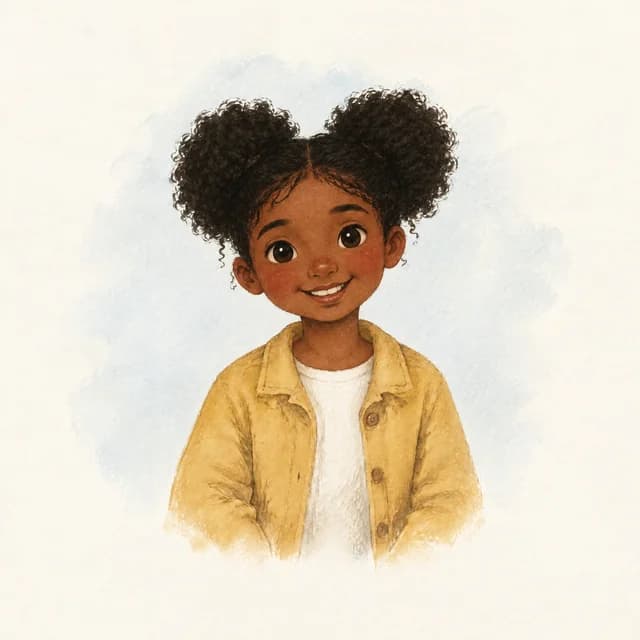
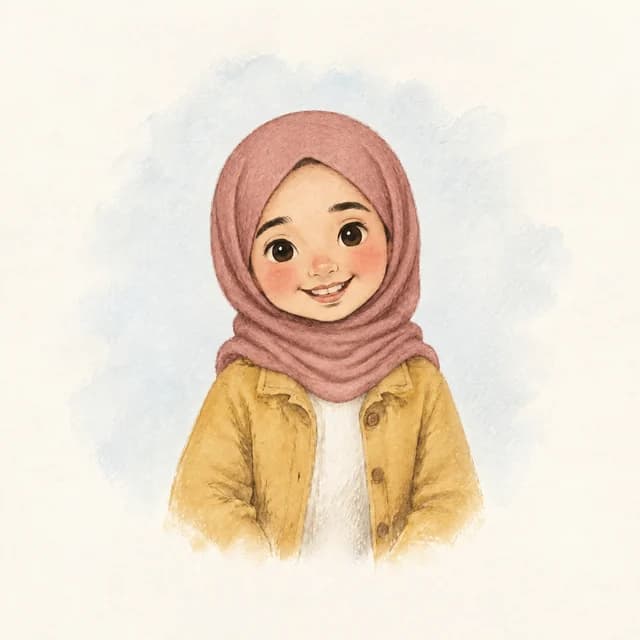
Painted to look like them
Painted from your photo, or pick boy or girl, four skin tones, nine hairstyles or a hijab, five hair colours, with or without glasses.

الشمس تغيب خلف أبراج دبيّ العالية. الجميع ينتظر… ويُصغي.
بعد قليل سيتكلّم مدفع الإفطار. لا يُطلق إلّا صوتًا: دويًّا كبيرًا واحدًا ونفخةً من الدخان الأبيض، ليُخبر المدينة كلّها أنّ الشمس غربت، وأنّ صيام اليوم انتهى.
سُدّي أذنيكِ يا تالين! ثلاثة، اثنان، واحد… بوووم!
The sun is sinking behind the tall towers of Dubai. Everyone is waiting… and listening.
Soon the iftar cannon will speak. It makes nothing but noise: one big bang and a puff of white smoke, to tell the whole city that the sun has set and the day’s fast is over.
Cover your ears, Taleen! Three, two, one… BOOM!
لا أحد يعرف بالضبط أين بدأ مدفع الإفطار. تقول حكايةٌ قديمة إنّه دوّى أوّل مرّة بالمصادفة في القاهرة، قبل أكثر من ٥٠٠ سنة، حين جرّبوا مدفعًا جديدًا عند الغروب تمامًا.
Nobody knows for sure where the iftar cannon began. One old story says it first boomed by chance in Cairo, more than 500 years ago, when a new cannon was tested just at sunset.
A real tradition on every page
From the lantern street of Cairo to Garangao night in Qatar: real places, real customs and a “Did you know?” fact on every spread, told by the lantern itself.
Their name on every page
The lantern talks to them all the way: “Wave hello, Taleen! He’s calling your name!”

انتهى صيام اليوم! لكنّ الإفطار لا يبدأ بوليمةٍ كبيرة، بل بشيءٍ صغيرٍ وحلو: تمرةٍ، ورشفةٍ من الماء البارد.
يُفطر كثيرٌ من الناس هكذا، كما كان يُفطر النبيّ محمّد صلّى الله عليه وسلّم قبل نحو ١٤٠٠ سنة. فالتمر يعطي الجسم المتعب طاقةً حلوةً وسريعة.
مرِّري الصحن على الجميع يا تالين. من يريد تمرة؟
The fast is over! But iftar doesn’t begin with a feast. First comes something small and sweet: a date, and a sip of cool water.
Many people break their fast this way, just as the Prophet Muhammad did about 1,400 years ago. Dates give a tired body quick, sweet energy.
Pass the bowl around, Taleen. Who would like a date?
في الإمارات أكثر من ٤٠ مليون نخلة، وتُزرع فيها نحو ١٥٠ نوعًا من التمر.
The UAE has more than 40 million date palms, and grows around 150 different kinds of dates.
Two languages on every page
Arabic with English, French or Spanish, so the whole family can read it together.
حملت تالين فانوس رمضان عبر العالم العربيّ: بحثت عن الهلال الجديد، ولوّحت للمسحّراتي، ومرّرت التمر عند الإفطار، وجهّزت الطعام للعائلات المحتاجة، وجمعت حلوى القرنقعوه، وتقاسمت فرحة العيد.
Taleen carried a Ramadan lantern across the Arab world: looked for the new moon, waved to the musaharati, passed round the dates at iftar, packed food for families in need, collected sweets at Garangao, and shared the joy of Eid.
A Little Lantern of Kindness certificate
After the story, a certificate in your child's name: the moon they looked for, the dates they shared, the food boxes they packed.
- IndonesiaAt Eid, called Lebaran here, families eat ketupat: rice cooked in little pouches woven from young coconut leaves.
- MalaysiaFor more than 100 years, a mosque in Kuala Lumpur has cooked bubur lambuk, a rice porridge, in giant pots and given it away free every Ramadan.
- PakistanOn Chand Raat, “the night of the moon” before Eid, markets stay open late, and girls buy bright bangles and paint their hands with henna.
- UAEEvery evening of Ramadan, the Sheikh Zayed Grand Mosque in Abu Dhabi serves free iftar to its guests: nearly a million meals in 2026.
- LebanonA favourite Ramadan drink is jallab: dates, grape molasses and rose water, served with pine nuts and raisins on top.
- TürkiyeIn Istanbul, mahya lights are strung between the minarets of old mosques to write words in the sky, a tradition more than 400 years old.
- EgyptChildren swing their lanterns in the streets and sing “Wahawi ya Wahawi”, a song so old that nobody knows what its first words mean.
- MoroccoIftar often starts with dates, a bowl of harira soup and chebakia: flower-shaped pastries dipped in honey and sprinkled with sesame.
- United KingdomSince 2013, the Ramadan Tent Project has held Open Iftars where anyone can share the meal, even in London’s Trafalgar Square.
A timeline of their life
At the back: Ramadan around the world, from Indonesia's ketupat to London's Open Iftar, and words to know: fanous, suhoor, iftar…
Read the first pages
This is Taleen's book. Yours will have your child's name and look.

مرحبًا يا تالين! أنا فانوسكِ، فانوس رمضان الخاصّ بكِ. صُنعتُ في القاهرة من الصفيح وقطعٍ من الزجاج الملوّن.
ها هو شعبان، الشهر الذي يسبق رمضان، يقترب من نهايته. ورمضان يتبع القمر، لذلك ينظر الناس الليلة نحو الغرب بعد غروب الشمس، باحثين عن هلالٍ جديد رفيعٍ كقُلامة الظفر.
فإذا رآه أحد، يبدأ رمضان غدًا!
ارفعيني عاليًا يا تالين. هل ترينه؟
Hello, Taleen! I’m your fanous, your very own Ramadan lantern. I was made in Cairo, from tin and pieces of coloured glass.
Sha’ban, the month before Ramadan, is ending. Ramadan follows the moon, so tonight people look west after sunset for the new crescent moon, as thin as a fingernail.
If someone sees it, Ramadan begins tomorrow!
Hold me up high, Taleen. Can you see it?
يتبع التقويم الهجريّ القمر، فيكون كلّ شهرٍ فيه ٢٩ يومًا أو ٣٠، ولهذا يأتي رمضان أبكر بنحو ١١ يومًا في كلّ سنة.
The Islamic calendar follows the moon, so each month lasts 29 or 30 days. That’s why Ramadan comes about 11 days earlier every year.

رمضان كريم! يستيقظ شارعكِ على الأضواء. يمدّ الجيران سلاسل المصابيح من شرفةٍ إلى شرفة، وتتمايل الفوانيس الورقيّة فوق الأبواب.
رمضان هو الشهر الذي يصوم فيه المسلمون، ويتصدّقون، ويجتمعون. يصوم الكبار من الفجر حتّى غروب الشمس، فلا يأكلون ولا يشربون طوال النهار. أمّا الأطفال الصغار فلا يُطلب منهم الصيام عادةً، وبعضهم يحبّ أن يتدرّب عليه جزءًا من النهار.
إلى الأعلى يا تالين! ناوِلي الأضواء لمن على الشرفة!
Ramadan Kareem! Your street wakes up in lights. Neighbours string bulbs from balcony to balcony, and paper lanterns sway over the doors.
Ramadan is the month when Muslims fast, give and come together. Grown-ups fast from dawn to sunset, with no food or drink all day. Little children usually don’t have to; some like to practise for part of the day.
Up it goes, Taleen! Pass the lights to the balcony!
رمضان هو الشهر التاسع في التقويم الهجريّ، واسمه مأخوذ من «الرَّمَض»، أي شدّة الحرّ.
Ramadan is the ninth month of the Islamic calendar. Its name comes from an old Arabic word for scorching heat.
أهلًا بكِ في القاهرة يا تالين، المدينة التي صُنعتُ فيها! قرب باب زويلة القديم، يمتلئ شارعٌ كامل بالفوانيس: بعضها صغيرٌ بحجم تفّاحة، وبعضها أطول من الكبار.
يُحكى أنّه قبل أكثر من ألف سنة، حين وصل الخليفة المعزّ لدين الله، حاكم مصر الجديد، إلى القاهرة في ليلةٍ من ليالي رمضان، خرج الناس بالفوانيس ليُضيئوا له الطريق، وأنّ القاهرة تتلألأ في كلّ رمضان منذ ذلك الحين.
أيّ لونٍ يلمع أكثر يا تالين؟
Welcome to Cairo, Taleen, where I was made! Near the old gate of Bab Zuweila, a whole street fills with lanterns: some as small as an apple, some taller than a grown-up.
It is told that more than a thousand years ago, when Caliph al-Mu’izz, the new ruler of Egypt, arrived in Cairo one Ramadan night, people came out with lanterns to light his way, and that Cairo has glowed every Ramadan since.
Which colour shines brightest, Taleen?
كلمة «فانوس» جاءت من كلمةٍ يونانيّة قديمة تعني «الضوء» أو «المصباح».
The word fanous comes from an old Greek word, phanós, which means “light” or “lantern”.
دُم، دُم، دُم! من يقرع الطبل في الظلام؟ إنّه المسحّراتي! قبل الفجر يمشي في أزقّة صيدا القديمة المرصوفة بالحجارة، قرب البحر في لبنان، يقرع طبلته وينادي الناس بأسمائهم.
حان وقت السحور، وجبةِ ما قبل الفجر. يأكل الكبار ويشربون الآن، لأنّ صيامهم يبدأ مع طلوع الفجر.
لوّحي له يا تالين! إنّه ينادي اسمكِ!
Boom, boom, boom! Who’s drumming in the dark? It’s the musaharati! Before dawn, he walks the old stone lanes of Saida, by the sea in Lebanon, beating his drum and calling people by name.
It’s time for suhoor, the meal before dawn. Grown-ups eat and drink now, because at first light their fast begins.
Wave hello, Taleen! He’s calling your name!
في المغرب يُسمّى من يوقظ الناس للسحور «النفّار»، وهو لا يقرع طبلًا، بل ينفخ في بوقٍ نحاسيّ طويل.
In Morocco, the wake-up caller is called the nafar. Instead of a drum, he blows a long copper horn.
$49 · preview every page first